CN



Wechat public account
1. Sand blasting (shot blasting)
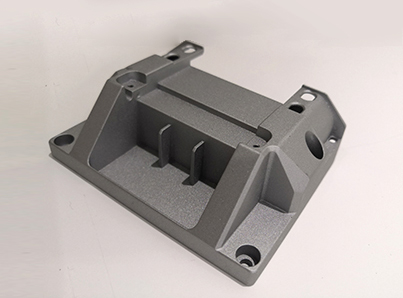
The surface of aluminum alloy die casting is cleaned and roughed by the influence of high speed sand flow. This surface treatment can make the surface of aluminum alloy die-casting parts obtain a certain degree of cleanliness and different roughness, so as to improve the mechanical properties of the casting surface, thereby improving the fatigue resistance of the casting, increasing the adhesion between it and the coating, extending the durability of the coating film, and also conducive to the flow and decoration of the coating. This process occurs regularly in Apple's various products and is increasingly being adopted by existing TV face housings or frames.
Step 2: Polish
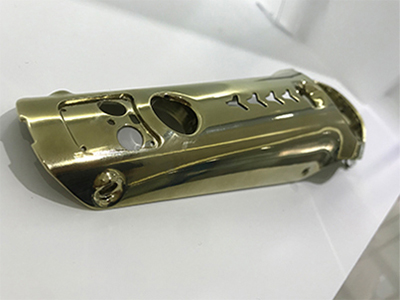
The surface roughness of aluminum alloy die-casting parts is reduced by mechanical, chemical or electrochemical methods, and a bright and flat surface processing method is obtained. Polishing process is mainly divided into: mechanical polishing, chemical polishing, electrolytic polishing. Aluminum alloy die-casting using mechanical polishing + electrolytic polishing can be close to the stainless steel mirror effect, giving a high-end simple, fashionable future feeling (of course, easy to leave fingerprints and more attentively).
3. Wire drawing
Metal drawing is the manufacturing process of repeatedly scraping out aluminum alloy die casting parts with sandpaper. Drawing can be divided into straight pull, unruly pull, spiral pull, thread pull. The metal drawing process can clearly show every trace of the wire, so that the metal matte shine out a delicate hair luster, the product is both fashionable and scientific.
4. Highlight cutting
The diamond knife is reinforced by a precision engraving machine (generally 20,000 rpm) on the spindle of a high-speed rotating machine to cut aluminum die-cast parts, thereby creating local highlight areas on the product surface. The brightness of the cutting highlight is affected by the speed of the milling cutter, the faster the drilling rate, the brighter the cutting highlight, and vice versa, the darker the easier it is to produce the cutter. Highlight cutting is particularly prominent in the use of mobile phones, such as the iPhone5, in recent years, some high-end TV metal frame using high light milling process, coupled with anodizing and wire drawing process, so that the whole TV is full of fashion and technical sharpness.
5. Anodizing
Anodizing refers to the electrochemical oxidation of metals or alloys. Aluminum alloy die-casting parts form an oxide film on aluminum products (anode) due to the application of current under the corresponding electrolyte and specific process conditions. Anodizing can not only solve the surface hardness, wear resistance and other defects of aluminum alloy die casting parts, but also extend the service life of aluminum alloy die casting parts and enhance the beauty, which has become an indispensable part of the surface treatment of aluminum alloy die casting parts, is currently the most widely used and very successful process.
6. Two-color anodizing
Two-color anodizing refers to the anodizing of aluminum alloy die castings and provides different colors for specific areas. The two-color anodizing process is complicated and the price is high. However, through the contrast between the two colors, the high-end and unique appearance of the product can be better reflected.
 Huzhou Rui magnesium precision metal Co., LTD
 189 5728 1336(Wong Sheng)
 ruimei@hzruimei.com
 568 Jinquan Road, Lijiaxiang Town, Changxing County, Huzhou City
Follow us on wechat